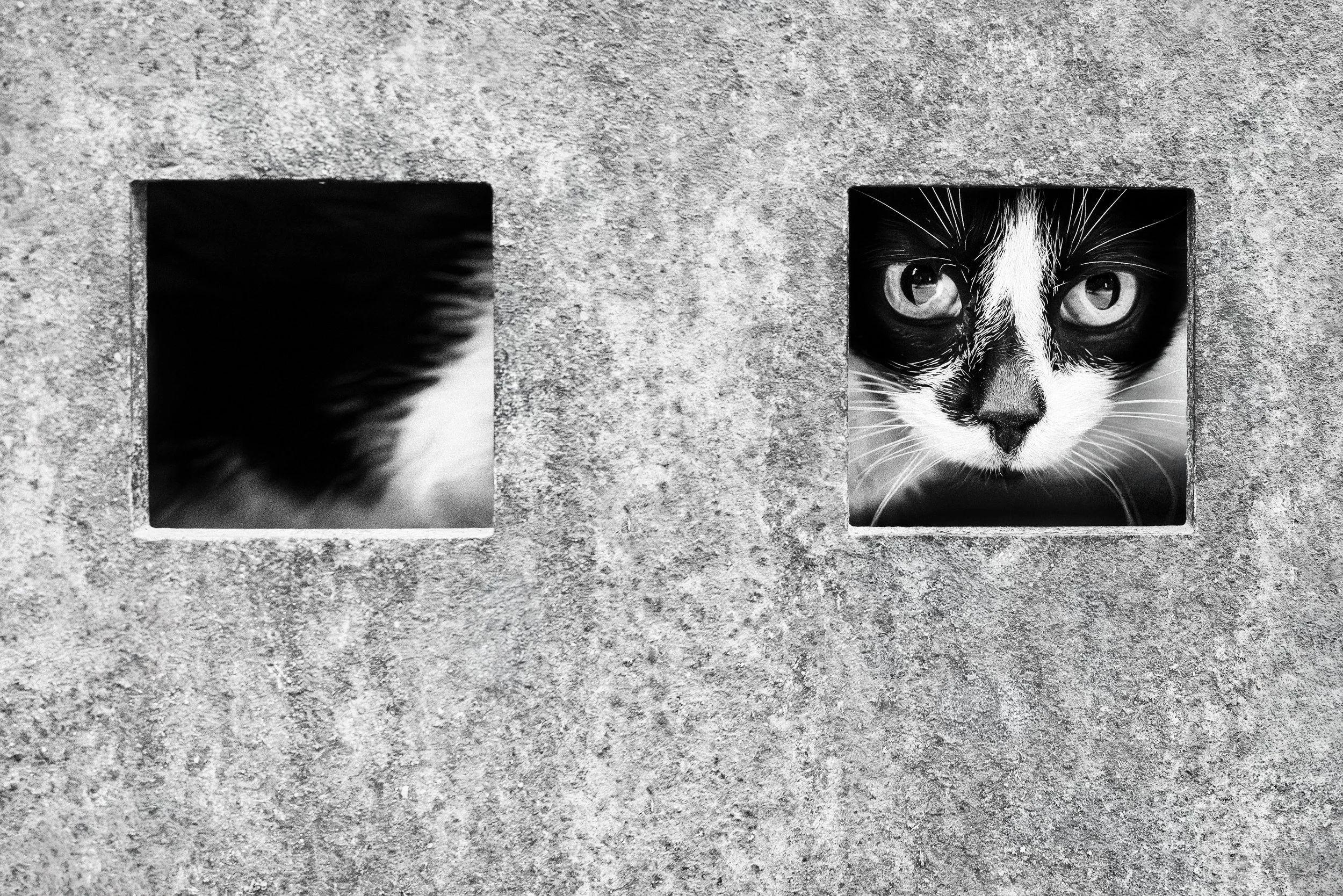
Feline Resistance
Valencia's street cats are everywhere.
At first, they enchant. There is something undeniably beautiful in a cat curled beneath light filtering through leaves, in a gaze that follows you from the shadows. It is easy to stay there — on the surface, in the postcard.
But this series was born from the moment I started getting closer. From learning their names, their stories, from hearing how some of them died. From understanding that behind that apparent calm are lives exposed to everything: to cold, to illness, to traffic, to dogs, to poison, to hands that cause harm.
And that despite it all, they are still here. Each one different from the next, with their own character, their own bonds, their own way of inhabiting the world. Not part of the landscape. Not a plague. Not an ornament. But beings that resist.
Once you truly see them, you cannot stop seeing them.
This series is an invitation to look closer.
Street cats are on the street because we put them there — through abandonment, through negligence, through a culture that continues to treat animals as disposable things. Their presence in our streets is neither picturesque nor natural: it’s the result of human decisions. And therefore, their wellbeing should also be our responsibility.
Photographing street cats is an ethical act before it’s an aesthetic one. Each image is an attempt to give back what abandonment took from them: visibility, dignity, individuality.
Black and white is not a decorative choice but a deliberate one, it is the language of contrast. And these cats are pure contrast: beauty and suffering, presence and invisibility, fragility and resilience, full lives lived in conditions that should not exist.
If there is one thing all sentient beings share, it is the desire not to suffer. And recognising that — in a street cat, in any animal — is the first step towards treating them with the compassion and respect they deserve.
Resistencia Felina
Los gatos callejeros de Valencia están en todas partes.
Al principio, embellecen. Hay algo innegablemente hermoso en un gato acurrucado bajo la luz que se cuela entre las hojas, en una mirada que te sigue desde las sombras. Es fácil quedarse ahí — en la superficie, en la postal.
Pero esta serie nació desde el momento en que empecé a acercarme. Que aprendí sus nombres, sus historias, que escuché cómo murieron algunos. Que entendí cómo detrás de esa aparente calma hay vidas expuestas a todo: al frío, a las enfermedades, al tráfico, a los perros, al veneno, a manos que hacen daño.
Y que a pesar de todo, siguen aquí. Cada uno de ellos distinto del otro, con su carácter, sus vínculos, su forma propia de habitar el mundo. Sin ser parte del paisaje, sin ser una plaga o un adorno. Seres que resisten.
Una vez que los ves de verdad, ya no puedes dejar de verlos.
Esta serie es una invitación a acercarse.
Los gatos callejeros están en la calle porque nosotros los pusimos ahí — por abandono, por negligencia, por una cultura que sigue tratando a los animales como cosas prescindibles. Su presencia en nuestras calles no es pintoresca ni natural: es el resultado de decisiones humanas. Y por lo tanto, su bienestar debería ser también nuestra responsabilidad.
Fotografiarlos es un acto ético antes que estético. Cada imagen es un intento de devolverles lo que el abandono les quitó: visibilidad, dignidad, individualidad.
El blanco y negro no es un recurso decorativo sino una decisión deliberada, es el lenguaje del contraste. Y estos gatos son contraste puro: belleza y sufrimiento, presencia e invisibilidad, fragilidad y resistencia, vida plena en condiciones que no deberían existir.
Si hay algo que comparten todos los seres sintientes, es el deseo de no sufrir. Y reconocer eso — en un gato callejero, en cualquier animal — es el primer paso hacia tratarlos con la compasión y el respeto que merecen.